If you enjoy this siteplease consider making a donation.
Home
Index of Memories.
Add Your Story
Features
Airfields
Allied Forces
Axis Forces
Home Front
Prisoner of War
Secret Places
Ships of WWII
Women at War
Those Who Served
Day-by-Day
World War One
Submissions
How to add Memories
Add Your Memories
Can you Answer?
Printable Form
Schools
School Study Center
Children's Bookshop
Information
Your Family History
Contact us
News
Bookshop
About
Links
World War 2 Two II WW2 WWII
Those who Served
A B C D E F G H I J K L M N O P Q R S T U V W X Y Z
Able Seaman. Tait . Royal Navy HMS Forfar
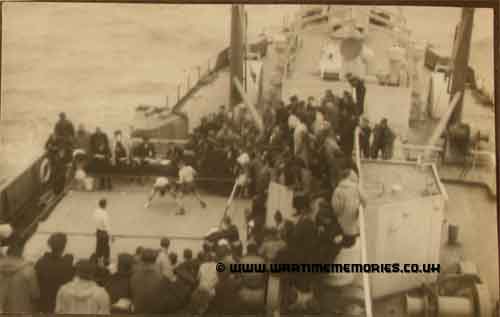
AB. Tait took part in the boxing match on the 10th of July 1940 onboard HMS Forfar, he fought OS. Conway, the match which consisted of three two minute rounds, was drawn.
Able Seaman Frederick William Tancock . (d.2nd Dec 1940)
Dorothy May "Dolly" Tanser . Land Army from Hull, Yorkshire)
My Mum was in the land army and I remember her telling me about the baby mice that would geting her hair and how she would tuck her pants into her socks to stop the mice running up her legs. She is my hero.
Ldg Wren Pamela Annette Tansley . Womens Royal Naval Service HMS Kestrel from Regent's Park, London, England.)
(d.7th Jul 1942)
Sgt. D. Tanuziello . RCAF 101 Sqd. from )
(d.21st Jun 1944)
K. R. Taplin . Royal Navy HMS Manchester
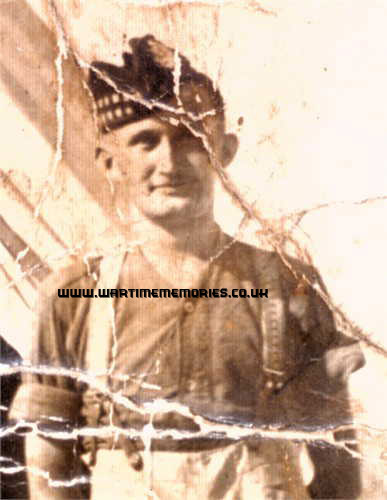
William Tarren . Army Cameronians (Scottish Rifles)
Ord. Seaman A. Taylor . Royal Navy HMS Forfar
A.Taylor was one of those who survived teh sinking of HMS Forfar.
Sgt. Francis James Taylor . RAF(VR) flight eng. 103 Sqd. from Bolton, Lancashire)
(d.20th Feb 1944)
Sgt. H. A. Taylor . RCAF 419 Sqd. from Canada)
Lt Cmdr. Paymstr. H. M. Taylor . Royal Navy HMS Forfar
Lt Cmdr Taylor survived the sinking of the Forfar, he was one of the Merchant Navy Officers who had remained with the ship under the T124 agreement when she transferred to the Royal Navy.
Maurice "Mo" Taylor . Royal Air Force rear gunner 458 Sqd.
Mr Taylor is a very long standing family friend, he is now 86 yrs. old, over the years he has told me many things about his wartime years.
He joined the RAF in 1938 and served with various units - 458, 460, 150 and possibly others. Holme on Spalding Moor, Molesworth, Binbrook are bases he remembers in the early part, flying in Wellingtons as a rear gunner. At this point in time he was shot down to which even today he finds hard to come to terms with and at the same time I would not press him to talk about. Beyond this point he served in Ceylon on various sqd's until 1946. I would love to find out more as the tales he tells me never cease to amaze me
Paul S Taylor . from Ohio, USA)
My cousin is doing research and has learned that a relative, Paul S. Taylor, was a POW at Stalag 4B, Muhlberg Sachsen 51-13. We would be very interested in any info that anyone might have. His widow is still alive and his name is now being added to a Veteran's Wall in his hometown. He was from Ohio. Did POW's receive a ribbon or medal in appreciation for their hardship? If so, I do not believe his widow is in possession of any, and at any possible dedication, it would be nice if she could be presented with it.
Sam Taylor . Civil Defence Manchester. ARP
I am attempting to find out about my uncle Sam Taylor who was in the ARP during WW2. Sam had his legs blown off during a bombing raid in Manchester, he received a Medal but I do not know what medal he received. Can anyone please help me find out more about my uncle Sam?
Sgt. Tom Taylor . RAAF bomb aimer 460 Sqd. from Australia)
(d.30th May 1943)
William John Taylor . Royal Navy HMS Royal Arthur
This photograph is of Class 78 (Signals) at HMS Royal Arthur Sep-1943 to Mar-1944. My Father, William John Taylor, is front-row first left.
F/O Ronald Teed . RAAF 512 Squadron (d.10th April 1944)
I am seeking information from family and friends of members of 512 Squadron RAAF, stationed at Broadwell. My uncle F/O Ronald Teed died on 10 April 1944 when his Dakota crashed at the airfield returning from a training mission. Any information regarding the squadron would be appreciated. The site is much appreciated for keeping these memories alive.
Sargent Edward W Tegge . USAAF 356th Fighter Group 361 Fighter Squadron from Pittsburgh Pennsylvania)
My uncle, Sgt Edward W. Tegge, served with the 356th Fighter Group 361st Fighter squadron during World War Two at Martlesham Heath, England. He was a Radio Technician know as a "Static Chaser" from Pittsburgh Pennsylvania. He enlisted on August 21st 1942.
Does anyone have any pictures of the ground crews of 361st Fighter Squadron or their radio technicians?
Sgt. Ernest van Telle . Australian Army 2/11th Btn. AIF
Able Seaman Ernest Tevenan . Royal Naval Volunteer Reserve HMS Forfar from Hull, Yorkshire)
(d.2nd Dec 1940)
Steward Sidney Thelwell . Naval Auxiliary Personnel HMS Forfar from Liverpool)
(d.2nd Dec 1940)
D. Thomas .
Flying Officer David Selwyn Thomas . RAF (d.16th September 1944)
Flight Sergeant David Standing Thomas . RAF (d.4th April 1942)
Flt. Sgt. Edwin Robert Thomas . Royal Air Force pilot 101 Sqd. from Forest Gate, Essex, England.)
(d.31st Mar 1944)
Lt. (j.g.) Harold Chester Thomas . U.S. Navy USS Boise (d.Oct. 1942)
I am an associate currently working on the namesakes of the individual vessels of the United States Navy for the web site NavSource.org. I need assistance obtaining a digital image of Lt. (j.g.) Harold C. Thomas. The image is to be posted along with his biography on the page dedicated to the escort destroyer USS Harold C. Thomas (DE-21) named in his honor. He was mortally wounded during the Battle of Cape Esperance. I am looking forward to hearing from former crew members or family members of the USS Boise with any information in the very near future or on any other Namesakes. We need tons of assistance in our project.
John Samuel Thomas .
My Dad John Samuel Thomas was in Stalag 357 during 1944. After the war he went to Australia with his family and lived till he was 68. Does anyone have any info on his time in the camp?
Mabel Irene Thomas . Land Army
On 3 September 1939, war was declared by Great Britain and France on Germany, and so World War 2 started. These were very frightening times. I was 20 years old at the time, and too old to be evacuated from my home in the ship-building town of Barrow-in-Furness in North West England, on the edge of the English Lake District. My father, being a Royal Naval reservist and a coppersmith by trade, was called up immediately into the Royal Navy, holding the rank of Chief Petty Officer.
Early in 1940, German aircraft dropped their first bombs on Barrow. These were incendiaries which landed very close to our home, but the Fire Brigade quickly dealt with them. We were issued with gas masks, which we had to carry everywhere with us in case of gas warfare.
Every home was provided with an Air Raid Shelter, ours was an Anderson and dug well into the ground in the garden. We spent many nights sitting there, well wrapped up, listening to the German planes flying overhead and wondering if the next high explosive bomb would land on us. After heavy rain our shelter, which we called 'Jerry View', would become flooded which meant that we would have to sit there without light or heat, fully clothed and with Wellingtons on, listening to the planes flying overhead, their target being the local shipyards.
Every night we packed a suitcase with our valuable documents and everything else of importance, including a first aid box and flasks filled with hot drinks, and took them into the shelter. My father came home on leave on one occasion, saw the shelter flooded and remarked that we would probably die of pneumonia first than from the effects of the bombing. During daytime raids we would be directed by an Air Raid Warden to the nearest surface shelter, which were usually brick built.
In May 1941, when the bombing was at its height, our home became damaged from the effects of bombs falling on a neighbouring housing estate and became uninhabitable. We were fortunately unhurt, and my mother found rented accommodation in the neighbouring town of Dalton-in-Furness.
During the same year, young women were being drafted into war work, and as a preference to working in a munitions factory, I decided to join the Women's Land Army (WLA) as it seemed to offer the healthy outdoor life which appealed to me. The WLA enabled men folk working on the land to be called up for military service.
I joined on 10 June 1941. Members of the WLA were part of the Ministry of Agriculture and were employed on the basis of a guaranteed weekly wage as laid down by the Agricultural Wages Board, covering a working week of not more than 48 hours in winter and not more than 50 hours in summer. I received a cash weekly wage of 22s.6d. (about £1.12p) after a deduction to cover board and lodging provided by my employer. I was paid for all public holidays and also for my annual holiday of six days, when I was given a free return rail warrant to my home. Members of the WLA were employed in horticulture, general farm work, ploughing, hedging, milking, land reclamation, pest extermination, harvesting, threshing and some even became shepherdesses. On joining I was posted, along with about 30 other Land Girls, to a WLA hostel in Letterston, in Pembrokeshire, a very long way from my home in Barrow.
We had a housekeeper looking after us, and were taken daily by lorry in all kinds of weather, complete with our beetroot sandwiches (which I came to loathe), to work on different arable farms in the area - potato picking, hedge trimming and corn threshing in its season, which was very dirty and horribly uncomfortable work.
Some days, as a change, we had cheese sandwiches, and these also I loathed. Over the days I became very unhappy, leading a life far removed from that depicted on the recruiting posters. Seeing that I was so miserable, Mrs Betty Ladd, the WLA representative in charge, suggested to me that I apply to fill a vacancy for a Land Girl at Pentre Mansion at Boncath, also in Pembrokeshire. This I successfully did, moving at the same time as Mrs Ladd, who was returning there. Initially Mrs Ladd and I had board and lodging in a neighbouring village, cycling to and from our work, but on approaching the tenant of Pentre Home Farm he gave us permission to convert one of the empty farm buildings, and we made ourselves a very comfortable billet. The days of beetroot or cheese sandwiches were now a thing of the past.
I was employed in the horticultural section of the WLA, my work being mainly in the greenhouses, thinning the grapes on the vines, pollinating the peaches and nectarines with a rabbit's foot and making sure that everything was well watered. I also picked the soft fruit, climbed the apple trees in the orchard, packing the surplus fruit ready to take to the shops in Cardigan for sale. The head gardener, together with four other gardeners, was involved in keeping the estate in good order with the digging of the gardens, mowing the lawns, etc, although I did a lot of the planting out.
During the war, Pentre Mansion, owned by the Saunders-Davies family, was commandeered by the Military Authorities to be used as an Auxiliary Hospital and Convalescence Home for sick and wounded servicemen. They occupied one half while the family lived in the other.
The mansion was a beautiful place, with its glittering chandeliers hanging from the ceilings and oil paintings of the family and their ancestors hanging on the walls of each room. The rooms had colourful names - the blue room or pink room, for example - and in them stood suits of armour which had been worn by the family ancestors during previous campaigns. The staff had all been retained - the cook, the maids, Lloyd the chauffeur who would convey the servicemen to and from the local railway station in the family limousine when they were going on or returning from leave. The service personnel were cared for by Voluntary Aid Detachment (VAD) nurses under the command of Matron, with an Army Medical Officer attending weekly. Sunday morning service was held in the chapel attached to the mansion, with one of the nurses playing the organ and the local vicar conducting the service.
The service personnel in their dress of vivid blue suit, white shirt, red tie and forage cap or beret were not allowed to walk into the gardens, but were allowed in the grounds in the front of the mansion, their discipline being maintained under an Army Sergeant Major.
Miss Barbara Saunders-Davies, the daughter of the family and about ten years older than me, bred beautiful Palomino horses. These were a lovely golden colour with cream mane and tail, and after work I spent many pleasant hours being taught horse riding by her.
Having been at Pentre since early 1942 I had met very many of the patients, socially and through my work, but none had really gained my affections until June 1945, when Royal Marine Stanley Ogilvie came to Pentre as a patient to recuperate from war wounds and attacks of malaria. I realised when I saw him that this was to be my future. Good looking, six feet tall, dark and handsome and resplendent in his dress uniform, and when we became better acquainted, I appreciated his sincerity and intelligence and we got on well together. We became engaged after a while, Stan leaving Pentre in August 1945 returning to his base at Plymouth, before being medically discharged.
World War 2 was now at an end. It had been at a tremendous cost, with enormous loss of life and a great deal of suffering to many more.
I was granted a willing release from the Land Army in January 1947, and it was with mixed feelings that I left Pentre, returning to my home in Barrow, which by then had been repaired and had become habitable once again. Stan came to live in Barrow and was successful in obtaining employment in the General Offices of the Barrow Haematite Steel Co Ltd.
We married on 16 August 1947, spending our honeymoon at Douglas in the Isle of Man, and then setting up home on Walney Island near Barrow. In 1950 our identical twin daughters, Dilys and Glenys were born. In 1965 Stan was offered a post in the Civil Service in Swansea. We moved there and it is where we still live. I am now an 85-year-old great-grandmother, and looking back over my life, I believe that it is the taking part during the growing up of the family which has given me most satisfaction, with us both helping our daughters to get on in life and to become good citizens, just the same as we were taught by our parents. The tendency to reminisce about the past is not just looking back, it's more like living one's youth and life all over again.
My tale has been about Past Times
The Present is with us
The Future is yet to come
Let us endeavour to make the most of it,
To the benefit of those we love and cherish
To the benefit of our fellow human beings as well as
To the benefit of ourselves.
Meirion "Tommy" Thomas . RAF 166 Squadron from Wales)
My Grandfather, Meirion Thomas, served at Kirmington during the war with 166 Squadron and flew in Lancasters. he was also in Number 1 Squadron at Tangmere at the start of the war. This is a long shot but if there is any one with information on him or knew of him or has any photos, please get in touch.
L/Cpl. Douglas Thompson . Army The Queen's Own Cameron Highlanders
George William Thompson . Royal Air Force 84 Sqd.
My late Father George William Thompson, Royal Air Force was on-board the ss Aslem when she was sunk. Thankfully he was rescued after several hours in the water, I will always remember my Father saying that he was full of praise for the bravery of The Reverend Pugh tendering to the injured Airman who were trapped in the sinking ship. Dad always insisted on wearing his life jacket when on-board, he was ordered by a senior officer (no name though) to take it off & pass it him, Dad refused to do this & thus saved his life when the torpedo struck. I have seen a photo of my Mother, taken in his cabin, that is now at the bottom of the Atlantic having gone down in the Anselm.
Thankfully Dad survived 1939 – 45 after serving in 84, 101, 109 & 2nd TAF from the beginning of the war, prior to that had served with the RAF in Iraq & Egypt (84 Sqd.) flying in such delights as Westland Wapitis & the Vickers Virginia transport.
I believe there is a plaque, statue & bust of the Rev Pugh commemorating his bravery & sacrifice, does anyone know where this is please? Any info would be appreciated.
L/Cpl. Leslie Thompson . Army The Queen's Own Cameron Highlanders
Leslie Thompson . Army Cameronians (Scottish Rifles)
Ldg, Seaman William James Thompson . Royal Navy HMS Forfar (d.2nd Dec 1940)
Asst.Steward Samuel Thomson . Merchant Navy SS. Athenia (d.3rd Sep 1939)
Bridget Thornton . Land Army from Silverdale)
My Mother served in the Land Army and was stationed in North Devon. I believe she resided in Instow at some point. Unfortunately she has recently been diagnosed with Alzheimers Disease. We are planning a family 'get together' in the area during September of this year when she will be 80. Is there anyone out there who perhaps remembers her as a lively young girl who was absolutely thrilled to be in Devon and I know she loved every minute of her time in the WLA. I know that she often drove a busload of gals around. She left when she was diagnosed with TB. Her married name is Pankhurst
Ronald Thorogood . RAF 101 Squadron
101 Squadron was a super secret squadron that provided defence for bombing raids through electonic interference of German Radio Controllers. 101 suffered more losses than any other bomber squadron. My uncle Ron Thorogood served as a rear gunner and was lost on a raid on his 4th mission over Hanover.
Henry Thow . Army No. 7 Commando
My father Henry Thow was in Stalag 383. He was Scottish and was taken prisoner on Crete after the parachute drop by the Germans. My Dad was in number 7 Commando and were really left to fight the rearguard. He hid out for a while in the mountains but was taken prisoner. The Germans were very bad to them and made them march to the boat to Italy. the men were in cattle trucks and very rarely let out. By the time they reached the camp many had died in the trains.
My Dad said he had been a 'Guest of the Furer' for 5 years! When he came home he was very thin and the last months in the camp was pretty rough as the Germans were not giving them their red cross parcels. He escaped twice and was in solitary often, also for refusing to work on New Years day!!
He had a lovley experience when he went back to Crete and was made a honorory member of the local Crete resistance.
Alice Tibbitts . WAAF 428 Ghost Squadron
My mother, Alice Gilbert (nee Tibbitts), was attached to the 428 Ghost Squadron at Middleton-St-George during the WW2 conflict. I understand she was one of WAAF's that charged the batteries for the plane's wireless.
Joan Tiddeman . Land Army
Colour Sgt. Peter Till . Army The Royal Hampshire Regiment
My Grandad Peter Till has written his story
I offer my story as follows, and trust it will enlighten, and at the same time ease the mental stress, which I experience at times. I am sure that true ‘comradeship’ carried us through.
I was captured in Tunisia, 1 March 1944. After POW Camps in Italy, and the German Army was retreating northwards, I was moved to Germany in May 1944. I went to Stalag V11 A at Moosberg – just outside Munich. It was relief to us, as we were de-loused, clothes fumigated, then after a shower, dusted over with DDT powder. We were all given a metal identity disc. On mine, which I still have in Stalag V11A No 129824: which means I must be on some records somewhere. Maybe Red Cross, who know.
From empty tins we made little stoves to brew tea in, from the Red Cross parcels. This meant that you needed fuel to burn in your little stove. Well the wooden floor of the huts was completely gone, just bare ground. You guessed right it had been used to ‘brew up’ by previous prisoners. When Red Cross parcels were issued, it was always 1 between 2. The first time I ate some of the rich food, I was really ill with stomach pains, which meant I sat for a long time on the outdoor toilet, which consisted of a trench with a pole across, supported by a trestle at each end. Oh! Well enough of that.
I did not stay long at Stalag V11A as a party of us were moved to a working camp No 3911 in Munich. Stalag V11A would have been released by the American 9th Army about 1 March 1945, as they advanced across Europe. True British spirit was always the mainstay of our existence, we had our ups and downs, what more can I say.
Lots of stories, but I only trust, and really sincere in wishing peace and happiness to all your family. Thank you.
F/O N. E. Tilly . Royal Air Force 138 Sqd.
Thomas Arthur Tinkler . Royal Navy HMS Sirius
My neighbour for over 20years was the late Thomas Arthur Tinkler of Nottingham.I know that he spent all or most of his war on Sirius.like many who served their country during that dark time he only spoke about his exsperiences after great deal of prompting.I know that he was on Sirius when she was part of operation Pedastol and when the ship was bombed.He also told me about her being repaired at Massawa. He was also on the D day landings and about being shelled by HMS Nelson when he was part of a shore party sent to help refloat allied landing craft. Seaman Tinkler as I often fondly called him was chosen at random to take lunch on HMS Belfast to mark the 50th anniversary of the D Day landings and their was not a prouder man in the land than he on that occasion. Tommy is pictured on several photographes on this page the best one though is 7th picture from the top of the page.He is front right as you look at it.As to his job aboard ship I think he was below decks and I believe he was "Engineers runner".
Thomas Arthur Tinkler . Navy HMS Sirius
The late Thomas Arthur Tinkler served on Sirius in WW2. He told me that he served throughout the Mediterranean and was on the ship during a repair period at Massawa (during the "must get through convoy to Malta)and onto the Normandy landings, where I believe he was part of a shore party sent to assist stranded landing craft. He told me whilst ashore they were shelled by HMS Nelson.
Tommy features on some of the photos on the web page, the most notable being on the gun deck to the front right of Harry Bamford. Seaman Tinkler, sadly passed away several years ago. Because I did not acquire a computer until recently, he never knew about the web site. Without doubt he would have been very proud to have seen himself on some of the snapshots.
Tommy was invited to lunch on board HMS Belfast to mark the 50th anniversary of the D-day landings and that really made him very proud. I understand that he was a stoker and acted as Engineers' runner when the ship was at action stations. I tried on several occasions to get Tom's name added to the crew list.
Finally, Tommy, like many men, had to be prodded and prompted to talk about his war, but such is the debt that we owe to the countless departed Tommy Tinklers that we should never forget them.
William Toal . Army The Queen's Own Cameron Highlanders
Tom "Ginger" Todd . Royal Air Force
I was stationed at Ossington during the 1940's.
Able Seaman. S. Tolhurst . Royal Navy HMS Forfar
S. Tolhurst survived the sinking of HMS Forfar in 1940.
Sgt. L. Toogood . Army The Queen's Own Cameron Highlanders
Daniel J Toohey . US Navy VB103 Sqd Fleet Air Wing 7
My Dad, Daniel J. Toohey, was stationed at Dunkeswell during the war.
Petty Offcr. Toop . Royal Navy HMS Manchester
F/S J. B. Topham . Royal Air Force pilot 514 Sqd.
On the 3rd of August 1944 at 11:58 F/S Topham took off in Lancaster LL716, JI-G2 from RAF Waterbeach to attack a flying-bomb supply facility at Bois de Cassan. The aircraft was shot down at 1410, crashing 10 km south of Beaumont (Oise), France, all the crew survived. Topham evaded capture along with F/S Dennehy, the other's were taken as prisoners of war.
- F/O J.B.Topham
- Sgt J.D.Reid
- F/O S.Baxter
- F/S J.R.McClenaghan
- F/S H.Gilmore
- F/S F.W.Dennehy
- Sgt J.Scully
- W/O W.E.Eyre
Able Seaman Frederick Norman Torrance . Royal Naval Volunteer Reserve HMS Forfar from Whitley Bay, Northumberland)
(d.2nd Dec 1940)
Seaman Frederick Gordon Tosdevin . Royal Naval Reserve HMS Forfar (d.2nd Dec 1940)
Flt. Sgt. Edward George Towle . Royal Air Force Volunteer Reserve bomb aimer 106 Sqd from Derby, England)
(d.16th Dec 1944)
Edward Towle was the Bomb Aimer of Avro Lancaster ND682 and lost his life when it was shot down by a night fighter at 03:54 hours on the 16th of December 1944 over the southeast part of the sea of Kattegat by a German JU 88 night fighter of 3./NJG 3. He has no known grave and he is commemorated on the Runnymede Memorial.
Flt. Sgt. Ernest Hugo Traeger . RAAF 101 Sqd. from Murray Bridge, South Australia.)
(d.31st Mar 1944)
Patricia Avrylle Trickey . Womans Land Army from Lee on Solent)
Mother, Pat Trickey served in the land army. I believe she worked for a Col Hillhead. If anyone remembers her. I would love to hear from them.
Ac /Sqd Leader Jack Hewson Trobe DSO.DFC. RAAF 10 Sqd from Australia)
I am looking for any information regarding Jack Trobe and his war service inc, any names of his crew members. Some of crew mates in Nov 1943 were F/S William Mowatt, mi-upper gunner, Sgt Robert Clough Bridge, flight engineer and Sgt Thomas Ernest Bisby, the wireless operator. These three crew members were all wounded.
Dave L. Trostle . US Navy from Lorain, Ohio, USA)
This photo is part of my Mother's collection it was taken at Dunkeswell in 1944. My Mother Virginia Quaife served there with the Red Cross.
W/O Dennis Arthur Tucker . RAF(VR) pilot 101 Sqd. from Alperton, Wembley, Middlesex.)
(d.4th Sep 1943)
Doris Turbutt . Land Army from Stoke Newington)
Gladys Turbutt . Land Army from Stoke Newington )
My sister and I, Doris and Gladys Turbutt, were based at Little Bourton in Banbury untill the well water ran out in 1943, we were then split up. My sister went to Swacliffe and I went to Bicester with all the girls in my photograph.
I am still in touch with Ada and Rose who in turn is in touch with Sylvia who used to be our Forelady and responsible for getting us out into the farms. When they held a reunion at the Albert Hall unfortunately only one of these ladies turned up, that was Joyce. I wonder if anyone in this photo might like to get in touch, I would love to hear from them. Doris has lived in Banbury since she married a Banbury man and I know Lilly also lives there.
Sub Lt. Turnbull . Royal Navy HMS Forfar
Sub Lt Turnbull is listed in the cast of the revue "Get Sailing" which was performed aboard HMS Forfar on eth 19th of June 1940.
Rfm. Robert Turnbull . Army 9th Btn. Cameronians (Scottish Rifles) from Edmonton, Middlesex.)
(d.28th Nov 1944)
I'm looking for information on the rifleman Robert Turnbull number : 3863491 who served on the 9th Bn., Cameronians ( Scottish rifles ) and was killed on 28th November 1944 in Lottum/Grubbenvorst in Holland.
George Topsy Turner . Royal Navy HMS Sirius
My father, George "Topsy" Turner served on board H.M.S. Sirius as a gunner in one of the forward turrets. He has now passed on but he did bring back some memoirs of his time aboard H.M.S.Sirius. Such as a ships bible - a battle penant and a cap band from the german warship Prinz Eugen. I also seem to recall him making a mention of saving the ships cat in a cap after a torpedo attack.
Jenny Swan "Etta" Turner . Land Army
I am writing on behalf of my Gran who served in the land army during WW2, she will be 90 years in May. I am getting in touch after seeing on the news about women from the land army being recognised and felt I had to do this for her as it was at the time a great passion in her life and one she recalled to us as children, I feel it is the least we can do for her. Her name was Jenny Swan Turner at the time residing at Victoria Crescent, Clarkston, Glasgow
Leslie Frederick Turner . Royal Marines
My Dad, Leslie Frederick Turner of the Royal Marines, was captured in Crete and imprisoned in Stalag 4C.
Ronald Henry Turner . Royal Navy FXL HMS Nelson
Cpl. Frederick Samuel Roland Tyson MM.. New Zealand Army 26th btn. from Springston, Canterbury, New Zealand)
(d.16th Jul 1944)
Can you help us to add to our records?
The names and stories on this website have been submitted by their relatives and friends. If your relations are not listed please add their names so that others can read about them
Did you or your relatives live through the Second World War? Do you have any photos, newspaper clippings, postcards or letters from that period? Have you researched the names on your local or war memorial? Were you or your relative evacuated? Did an air raid affect your area?
If so please let us know.
Help us to build a database of information on those who served both at home and abroad so that future generations may learn of their sacrifice.
Celebrate your own Family History
Celebrate by honouring members of your family who served in the Secomd World War both in the forces and at home. We love to hear about the soldiers, but also remember the many who served in support roles, nurses, doctors, land army, muntions workers etc.
Please use our Family History resources to find out more about your relatives. Then please send in a short article, with a photo if possible, so that they can be remembered on these pages.
Website and ALL Material © Copyright MIM to MMVIII
- All Rights Reserved